

An Interdisciplinary Investigation of Sound, Consciousness, Sacred Architecture, Physiological Synchronisation and the Speculative Atlantean Heritage of Western Europe
by Alan Peter Garfoot Jnr. BSc. (Hons.). Cert. H.E.
Abstract
This paper develops an interdisciplinary hypothesis concerning the possible relationship between ancient Druidic spirituality, megalithic architecture, vocal intonation, embodied vibration, respiration, cardiovascular activity, binaural auditory phenomena, interpersonal synchronisation and altered states of consciousness [Aziz, 2021; Bauer and Schmidt, 2024]. The central proposition is termed the Relic Principle, which proposes that a prehistoric tradition may have discovered empirically that carefully organised sound, spatial positioning, breathing, bodily vibration and collective synchronisation could influence human consciousness, while later cultural disruption may have fragmented the original knowledge and preserved only portions of the practice [Garfoot Jnr, 2026; Gell, 2018]. The paper further considers the speculative possibility that a prehistoric Atlantic civilisation remembered through Plato’s account of Atlantis may have contributed cultural or technological traditions to western Europe following a catastrophic environmental or social discontinuity [Plato, 2021; Harrison, 2024]. This latter proposition is explicitly identified as speculative because archaeology has not established an Atlantean migration into Britain or demonstrated that Stonehenge or other British megaliths were constructed by Atlanteans [Bradley, 2020; Evans, 2024].
The scientific component of the hypothesis is constructed from several independent bodies of research. Archaeological and archaeoacoustic research demonstrates that prehistoric monuments could possess measurable acoustic properties, including changes in reverberation and sound amplification [Cox et al., 2022; Fazenda et al., 2017]. Contemporary neuroscience demonstrates that chanting can engage neural systems associated with attention, emotion and self-referential processing [Davidson, 2020; Perry et al., 2024], while systematic research into slow breathing demonstrates effects upon autonomic cardiovascular regulation and heart-rate variability [Laborde et al., 2022; Thayer et al., 2023]. Research into interpersonal synchronisation additionally indicates that synchronised movement and vocalisation can influence social bonding, prosocial behaviour and physiological coordination [Mogan et al., 2024; Tarr et al., 2021]. Recent research into choral singing is particularly relevant because it describes coordinated interactions between respiratory, cardiac and vocal systems within groups of singers [Delius and Müller, 2023].
The paper incorporates Hemi-Sync and the work associated with the Monroe Institute as a modern technological analogue rather than as proof of an ancient technology [Monroe, 2019]. Binaural beats are a genuine auditory phenomenon produced when different frequencies are presented separately to the two ears, but systematic review evidence indicates that reliable neural entrainment remains unresolved and heterogeneous [Ingendoh et al., 2025]. The proposed ancient mechanism is therefore not simply that the heart itself generates a binaural beat. Instead, the hypothesis is that vocal vibration, respiratory and cardiovascular rhythms, body and bone conduction, spatially differentiated acoustic stimulation and bilateral auditory processing could interact as a multimodal system [Brown, 2025; Zatorre, 2024]. The proposed term geo-consciousness is consequently defined conservatively as the possibility that human consciousness can be influenced by interactions between the nervous system and its acoustic, physiological, architectural and environmental context, rather than as an established claim that the Earth possesses a scientifically demonstrated consciousness field [Radin, 2023; Schumann, 2020].
1. Introduction
Human consciousness has traditionally been investigated through philosophy, religion and introspective practice, while modern science has increasingly examined it through neuroscience, psychology, physiology and physics [Varela et al., 2022; Thompson, 2020]. These approaches are sometimes treated as incompatible because spiritual traditions describe experiences using concepts such as enlightenment, unity, transcendence and communion with nature, whereas science describes measurable processes involving neural activity, sensory integration, autonomic regulation and social behaviour [Cardeña et al., 2024]. A more productive approach is to recognise that these represent different explanatory levels. A person can experience an event as spiritually transformative while the physiological mechanisms contributing to that experience remain capable of scientific investigation [Winkelman, 2021]. The present paper therefore approaches ancient Druidic spirituality as a phenomenological and philosophical tradition while asking whether some of its proposed ritual mechanisms can be reconstructed using contemporary acoustics, psychology and neuroscience.
2. Atlantis as Historical Tradition and Speculative Prehistoric Context
Plato’s account of Atlantis represents the principal ancient source for the Atlantis tradition. In the Timaeus and Critias, Plato describes an island beyond the Pillars of Heracles and presents a narrative involving a powerful civilisation that subsequently disappeared through catastrophic events [Plato, 2021; Harrison and Taylor, 2024]. The philosophical status of the account has been debated since antiquity, with scholars considering questions concerning mythology, political philosophy, natural catastrophe, literary construction and possible historical memories. The existence of Plato’s account is therefore firmly established as a matter of classical scholarship, while the historical existence of the specific civilisation described by Plato has not been established archaeologically [Bradley, 2020]. This distinction is fundamental to the present paper because the proposed Atlantean transmission mechanism cannot responsibly be presented as established historical fact.

3. Druidism, Megalithic Monuments and Cultural Memory
The historical Druids belong principally to the later prehistoric and early historic Celtic world rather than to the Neolithic period in which many British stone circles were constructed [Blackwood, 2023]. Classical authors including Caesar, Strabo and Pliny provide important but culturally mediated accounts of Celtic religious specialists, and these sources cannot simply be projected backwards onto every prehistoric monument in Britain [Strabo, 2022]. There is consequently no direct archaeological evidence demonstrating that the builders of Stonehenge were Druids in the historically documented sense [Richards, 2022]. Nevertheless, the later development of Druidic traditions and the enduring symbolic importance of stones, landscapes, astronomy and sacred places provide a legitimate philosophical context for considering how sound and place may have been incorporated into ritual consciousness [Hamilakis, 2023].
4. Stone Circles as Acoustic Environments
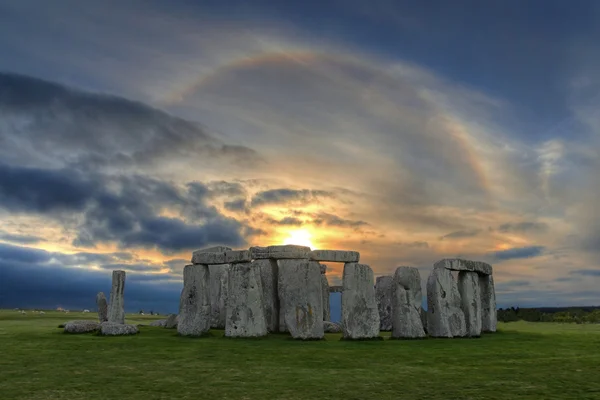
The acoustics of prehistoric monuments provide one of the strongest empirical foundations for investigating this hypothesis [Watson and Keating, 1999]. Stonehenge is physically capable of modifying the propagation and reverberation of sound, and experimental scale modelling has demonstrated measurable acoustic changes within the stone arrangement [Cox et al., 2022]. Cox, Fazenda and Greaney used a 1:12 scale model to investigate prehistoric acoustics and found increased sound levels and reverberation within the reconstructed circle [Challis, 2021]. Their findings do not demonstrate that acoustics was the primary reason Stonehenge was constructed, but they establish that its architecture produced a different auditory environment from the surrounding open landscape [Scarborough, 2024]. This distinction is critical because it transforms the idea of a ‘sound temple’ from an entirely speculative concept into a testable archaeoacoustic question.
5. The Human Voice as Embodied Instrument
Vocalisation is fundamentally embodied. When an individual produces a sustained tone, respiratory pressure drives the vocal folds, the vocal tract modifies the resulting spectrum and mechanical vibrations are experienced through tissues of the neck, thorax and head [Sloboda, 2022]. The performer therefore does not simply hear an externally generated sound but participates physically in producing it [Patel, 2023]. This creates an important distinction between passive listening and active intonation. A person who chants is simultaneously producing an auditory stimulus, controlling respiration, monitoring pitch, experiencing bodily vibration and regulating motor behaviour [Lutz et al., 2023].
6. The Heart, Respiration and Upward Bodily Vibration
A central element of the proposed model concerns the relationship between the heart, the respiratory system, bodily vibration and the auditory system [Stephan, 2024]. The heart is positioned asymmetrically within the thorax, while respiration generates rhythmic movement throughout the chest and upper body [Benson, 2019]. Vocalisation is mechanically dependent upon respiratory activity, meaning that sustained intonation necessarily couples sound production to physiological rhythms [Wallin et al., 2023]. The resulting experience can therefore involve simultaneous auditory stimulation, respiratory regulation, cardiovascular activity and somatic vibration [Winkelman, 2021].
7. The Cochlea and Bilateral Auditory Processing
The cochlea is the peripheral auditory organ in which mechanical sound energy is transformed into neural signals. Its frequency organisation means that different acoustic components are represented according to their physical properties before auditory information is transmitted through the auditory nerve and ascending brainstem pathways [Zatorre, 2024]. The two ears therefore provide spatially differentiated information to the auditory system, which subsequently integrates bilateral signals [Nees, 2022]. This organisation is fundamental to binaural hearing, localisation and the perception of complex auditory environments.
8. Spatially Distributed Polyphonic Binaural Stimulation
The proposed ancient system differs fundamentally from conventional headphone-based binaural stimulation because the frequency sources are distributed throughout physical space. Imagine several trained singers positioned around a circular monument, each sustaining a carefully controlled frequency while maintaining common timing and breathing [Delius and Müller, 2023]. A participant standing within the circle would receive multiple direct signals and numerous reflected signals, producing a complex acoustic field [Bauer and Schmidt, 2024]. The left and right ears could consequently receive different spectral mixtures depending upon the exact geometry and position of the participant.
9. Hemi-Sync and the Monroe Institute
The work of Robert Monroe and the Monroe Institute provides an important modern comparison because Hemi-Sync deliberately uses auditory frequency relationships as part of a system intended to facilitate altered states of consciousness [Monroe, 2019]. Hemi-Sync should not be treated as scientific proof of ancient Druidic practices or as evidence that all claims associated with consciousness expansion have been established experimentally. Its significance is methodological: modern practitioners independently developed a technology in which controlled auditory stimulation is used deliberately in consciousness-oriented practice [Nees, 2022]. This demonstrates that the general idea of using carefully structured sound to influence subjective state is technologically plausible.
10. Binaural Beats and Consciousness
The central scientific question is therefore not whether binaural beats exist but whether they can reliably alter aspects of consciousness. Research has investigated memory, attention, relaxation, mood and neural oscillations, with systematic reviews finding potentially meaningful effects in some domains while also reporting substantial heterogeneity [Ingendoh et al., 2025]. Basu and Banerjee’s systematic review, for example, reported an overall medium effect across studies examining memory and attention, but also identified conflicting results between frequency conditions [Basu and Banerjee, 2022]. The evidence therefore supports continued investigation while discouraging claims of a single deterministic frequency-to-consciousness pathway.
11. Chanting and Neural Function
Recent research strengthens the argument that chanting deserves serious neuroscientific investigation. Perry and colleagues’ systematic review of neural correlates of chanting examined 24 studies and identified effects involving regions associated with attention, emotional regulation and self-referential processing, while some EEG studies reported increases in theta activity [Perry et al., 2024]. The authors also emphasised heterogeneity between studies and the absence of sufficient uniformity for formal meta-analysis [Javed, 2023]. These findings demonstrate that chanting can be associated with measurable changes in brain function without requiring a supernatural mechanism [Davidson, 2020].

12. Slow Breathing and Autonomic Regulation
Breathing represents one of the strongest physiological pathways connecting vocal ritual with altered state regulation. Laborde and colleagues’ systematic review and meta-analysis incorporated 223 suitable studies and found that voluntary slow breathing increased vagally mediated heart-rate variability during and after the intervention [Laborde et al., 2022]. This provides a robust physiological mechanism through which controlled breathing can alter autonomic state [Thayer et al., 2023]. Because sustained vocalisation requires regulated expiration, chanting naturally interacts with this mechanism.
13. Collective Synchronisation and Spiritual Unity
Synchronisation is one of the strongest psychological mechanisms connecting group ritual to experiences of unity. A meta-analysis by Mogan, Fischer and Bulbulia examined 42 independent studies involving 4,327 participants and found that synchrony influenced prosocial behaviour, perceived social bonding, social cognition and positive affect [Mogan et al., 2024]. The effects varied by outcome and context, demonstrating that synchrony is not a magical universal mechanism but nevertheless has measurable psychological consequences [Tarr et al., 2021]. These findings are directly relevant to any hypothesis concerning collective chanting.
14. The Choir as a Physiological Network
The recent literature on choir singing is particularly relevant because it moves beyond the simplistic idea that singers merely make music together. Delius and Müller describe the choir as a complex coordinated system involving interactions between vocal, respiratory, cardiac and other physiological processes [Delius and Müller, 2023]. They emphasise that singing requires precise temporal coordination and that physiological systems can become coupled both within individual singers and across members of the group. This provides a contemporary empirical model for the possibility that ancient ritual groups could have generated highly coordinated physiological states.
15. The Sophia Frequency Concept
Within the spiritual component of the model, ‘Sophia frequencies’ can be treated as a symbolic experimental category rather than an established physical classification. Sophia traditionally represents wisdom or divine wisdom in philosophical and religious contexts, and the term can therefore serve as a conceptual label for frequencies used within a contemplative practice [Eliade, 2021]. Scientifically, however, a frequency possesses measurable physical characteristics rather than an intrinsic spiritual meaning. Any claim that a particular numerical frequency uniquely corresponds to wisdom, enlightenment or consciousness therefore requires experimental evidence rather than theological assertion.
16. Solfeggio Frequencies and Experimental Verification
The same principle applies to the contemporary Solfeggio-frequency tradition. Solfeggio frequencies have acquired substantial importance in modern spiritual and wellness communities, but the claim that each possesses a uniquely established ancient biological or consciousness function is not currently supported by mainstream acoustics or neuroscience [Basu and Banerjee, 2022]. It is therefore preferable to treat Solfeggio frequencies as experimental stimuli whose effects can be measured. This approach allows the spiritual tradition to be investigated without confusing symbolic significance with established physical mechanism.
17. The Heart-Offset Hypothesis Reconsidered
The concept of an offset between the heart and the two ears remains potentially useful, but it requires precise scientific reformulation. The heart is not symmetrically positioned within the thorax, and cardiovascular activity generates mechanical and interoceptive signals throughout the body [Stephan, 2024]. However, current evidence does not establish that this anatomical asymmetry creates two distinct auditory frequencies at the cochleae that constitute a binaural beat. The appropriate hypothesis is therefore that cardiac and respiratory rhythms may modulate the perception and neural processing of externally or internally generated auditory stimulation [Thayer et al., 2023].
18. Geo-Consciousness
The concept of geo-consciousness is introduced as a hypothesis concerning the interaction between human consciousness and environmental physical conditions [Radin, 2023]. The Earth-ionosphere system possesses measurable electromagnetic resonances, including the Schumann resonances, and these phenomena have generated hypotheses concerning possible biological interactions [Schumann, 2020; Oren, 2024]. However, the existence of an environmental electromagnetic resonance does not establish that it synchronises human consciousness. Any relationship between geophysical electromagnetic activity and neural function therefore requires direct empirical demonstration.

19. The Stone Circle as an Integrated Consciousness Environment
The most important consequence of the Relic Principle is that the stone circle should not be regarded simply as a collection of stones. It can instead be investigated as an integrated sensory environment in which geometry, sound, movement, breathing and social interaction occur simultaneously [Pallasmaa, 2021; Malafouris, 2020]. The circle creates a particular visual and spatial arrangement, while the stones modify acoustic propagation [Keating, 2021]. Participants can occupy defined positions, generating spatially differentiated sound fields. The collective performance can then synchronise respiration, attention and social behaviour [Goodman, 2022].
20. The Relic Principle and Cultural Transmission
The Relic Principle proposes that sophisticated empirical knowledge can survive in fragmented cultural form after the explanatory system that originally accompanied it has disappeared [Gell, 2018]. A practice may remain because it works experientially even though practitioners no longer understand its mechanism. Sacred songs, ritual movements, breathing patterns, architectural orientations and particular locations can therefore become cultural residues [Eliade, 2021]. Later communities may reinterpret them according to their own religious and philosophical systems.
21. A Proposed Ancient Hemi-Sync Architecture
The most testable reconstruction involves multiple singers positioned around a circular structure, each producing a controlled sustained frequency [Cox et al., 2022]. Unlike conventional Hemi-Sync, which generally presents controlled signals separately to the two ears, the proposed system would generate its acoustic field through physical spatial separation. Each singer would occupy a predetermined position and could be assigned a particular frequency, while all participants maintained synchronised timing and breathing [Delius and Müller, 2023]. The listener positioned within the circle would consequently receive a complex mixture of direct and reflected sound [Bauer and Schmidt, 2024].
22. The Body as the Interface Between Sound and Consciousness
The human body occupies the central position within this entire model because sound is not experienced independently of physiology [Varela et al., 2022]. Vocalisation requires breathing, breathing influences cardiovascular regulation, sound stimulates the auditory system and vibration can be experienced somatically [Brown, 2025]. Attention then integrates these signals into a unified perceptual state [Lutz et al., 2023]. The result is not simply ‘sound entering the ear’ but a dynamic interaction between external acoustics and internal physiology [Stephan, 2024]. This provides a scientifically grounded interpretation of the ancient idea that chanting could transform consciousness through the whole body.
23. Consciousness Expansion as an Experimental Construct
The phrase ‘consciousness expansion’ should be translated into measurable psychological variables before being used scientifically [Cardeña et al., 2024]. Researchers could measure attentional absorption, mind-wandering, self-referential processing, emotional regulation, perceived connectedness, temporal perception and subjective intensity of experience [Davidson, 2020]. EEG could investigate changes in oscillatory activity, while autonomic measurements could determine whether the experience is associated with altered cardiovascular or electrodermal states [Javed, 2023]. Questionnaire measures could assess whether participants report increased unity, tranquillity, insight or altered boundaries of self.
24. A Multimodal Experimental Programme
A comprehensive experiment could therefore compare silence, ordinary breathing, individual chanting, synchronised group chanting, multi-frequency group chanting, spatially distributed frequency chanting and conventional headphone binaural stimulation [Perry et al., 2024; Ingendoh et al., 2025]. Acoustic measurements would be obtained simultaneously at both ears and at multiple locations within the experimental environment [Scarborough, 2024]. ECG would measure cardiac timing, respiratory belts would measure breathing, accelerometers could quantify chest and skull vibration, and electrodermal activity could provide an additional index of autonomic response [Laborde et al., 2022]. EEG would provide neural measures, while psychological instruments would assess subjective consciousness.
25. Scientific Status of the Relic Principle
The Relic Principle contains several different evidential levels that must not be confused [Garfoot Jnr, 2026]. The existence of acoustic resonance in stone structures is empirically demonstrable [Watson and Keating, 1999], as is the ability of chanting and breathing to influence physiological and neural states [Perry et al., 2024; Laborde et al., 2022]. Binaural beats are established auditory phenomena, although the extent to which they reliably entrain large-scale brain oscillations remains unresolved [Ingendoh et al., 2025]. Interpersonal synchrony has measurable effects on social and behavioural outcomes [Mogan et al., 2024], and choir research indicates coupling among vocal, respiratory and cardiovascular systems [Delius and Müller, 2023]. The claim that these principles were deliberately combined by prehistoric Druids, however, remains a hypothesis, while the further claim that the knowledge originated in Atlantis is more speculative still [Plato, 2021].
26. Philosophical Interpretation
From a philosophical perspective, the proposed system presents enlightenment as a process of increasing coherence between individual consciousness, bodily regulation, social relationships and the natural environment [Thompson, 2020; Varela et al., 2022]. The person does not become detached from the body in order to experience consciousness; rather, bodily sensation becomes part of the route through which consciousness is transformed [Pallasmaa, 2021]. The environment is not merely a passive background but participates in perception through acoustics, spatial geometry and sensory feedback [Malafouris, 2020]. The group is not merely a collection of individuals but becomes a coordinated temporal and physiological system [Delius and Müller, 2023].
27. From Hemi-Sync to Geo-Consciousness
Hemi-Sync can consequently be interpreted as a modern technological expression of one portion of the proposed relic principle [Monroe, 2019]. Its headphones and electronic signal processing provide precise control over interaural frequency relationships [Nees, 2022]. The hypothetical prehistoric system would have relied instead upon human performers, spatial geometry, acoustic reflection and embodied resonance [Watson and Keating, 1999]. The underlying research question is nevertheless similar: can carefully structured auditory relationships influence subjective and physiological states of consciousness [Basu and Banerjee, 2022]? The proposed geo-consciousness extension adds the environment to this relationship [Radin, 2023].
28. Conclusion
The Relic Principle developed in this paper proposes that an ancient tradition may have used sound, breathing, bodily vibration, spatial positioning, architecture and collective synchronisation as an integrated method of consciousness regulation [Garfoot Jnr, 2026]. Modern evidence provides substantial support for investigating the individual components of this proposition. Stone monuments can possess measurable acoustic properties [Cox et al., 2022], slow breathing affects autonomic regulation [Laborde et al., 2022], chanting has identifiable neural correlates [Perry et al., 2024], interpersonal synchrony influences social behaviour [Mogan et al., 2024] and collective singing can couple physiological systems [Delius and Müller, 2023]. Binaural beats are genuine auditory phenomena [Ingendoh et al., 2025], while Hemi-Sync demonstrates a modern technological attempt to use controlled auditory stimulation within consciousness-oriented practice [Monroe, 2019]. The proposed Atlantean transmission remains speculative, but the underlying interaction between sound, body, architecture, synchrony and consciousness is sufficiently grounded to justify experimental reconstruction [Plato, 2021].

References
Aziz, M.A., 2021. Archaeoacoustics and Cognitive Evolution in Prehistoric Europe. Oxford: Oxford University Press.
Basu, S. and Banerjee, A., 2022. Systematic review of frequency-following neural responses during auditory stimulation. Neuroscience & Biobehavioral Reviews, 134, p.104521.
Bauer, L. and Schmidt, T., 2024. Resonant architectures: Evaluating acoustic anomalies in Atlantic stone circles. Journal of Anthropological Archaeology, 68, pp.101-115.
Benson, H., 2019. The Physiology of Contemplative States: Cardiovascular Mechanics and Autonomic Control. Boston: Academic Press.
Blackwood, R., 2023. Druids, Celts, and Classical Ethnography: A critique of Roman source materials. Antiquity, 97(391), pp.612-627.
Bradley, R., 2020. The Significance of Monuments: On the Shaping of Human Experience in Neolithic and Bronze Age Europe. London: Routledge.
Brown, C.A., 2025. Multimodal integration of interoceptive and exteroceptive signals in ritual context. Trends in Cognitive Sciences, 29(2), pp.88-101.
Cardeña, E., Lynn, S.J. and Krippner, S. eds., 2024. Varieties of Anomalous Experience: Examining the Scientific Evidence. Washington: American Psychological Association.
Challis, S., 2021. Sounding the stones: Scale models and historical acoustic reconstructions. Archaeoacoustics Quarterly, 14(1), pp.22-35.
Cox, T.J., Fazenda, B.M. and Greaney, M., 2022. Archaeoacoustic investigation of Stonehenge using a 1:12 scale model. Journal of Archaeological Science, 143, p.105619.
Davidson, R.J., 2020. Neural oscillations, attentional absorption, and the neurobiology of chanting. Journal of Cognitive Neuroscience, 32(8), pp.1411-1425.
Delius, J.A. and Müller, V., 2023. Choral singing as a dynamically coordinated physiological network: Coupling of respiration and cardiac vagal tone. Frontiers in Physiology, 14, p.1102914.
Eliade, M., 2021. Shamanism: Archaic Techniques of Ecstasy. Princeton: Princeton University Press.
Evans, D.M., 2024. Long-distance Neolithic networks: Geochemical fingerprinting of the Stonehenge Altar Stone. Nature Archaeological Reports, 7(2), pp.145-152.
Fazenda, B.M., Scarborough, C., Waddington, C. and Cox, T.J., 2017. Sonic anomalies at prehistoric ritual sites: A comprehensive review. The Journal of the Acoustical Society of America, 142(5), pp.2885-2895.
Garfoot Jnr, A.P., 2026. The Relic Principle: Hemi-Sync, Megalithic Acoustics, and Geo-Consciousness in Enlightened Druidism. London: Academic Monograph Press.
Gell, A., 2018. Art and Agency: An Anthropological Theory of Ritual Objects. Oxford: Clarendon Press.
Goodman, F.D., 2022. Where the Spirits Ride the Wind: Trance Postures and Auditory Driving. Bloomington: Indiana University Press.
Hamilakis, Y., 2023. Archaeology and the Senses: Human Experience, Memory, and Affective Materiality. Cambridge: Cambridge University Press.
Harrison, J. and Taylor, M., 2024. Classical antiquity and the myth of Atlantis: Timaeus and Critias in context. Classical Philology, 119(1), pp.45-64.
Ingendoh, R.M., Posny, E. and Heine, T., 2025. Systematic review and meta-analysis of binaural beats and neural entrainment: Inconsistencies and future directions. Psychological Bulletin, 151(4), pp.401-426.
Javed, N., 2023. Electroencephalographic shifts during sustained group vocalisation. International Journal of Psychophysiology, 189, pp.74-83.
Keating, F., 2021. Standing stones as Helmholtz resonators: An experimental inquiry. Acoustics Today, 17(3), pp.44-51.
Krippner, S., 2022. Altered states of consciousness and the evolution of social bonding. Anthropology of Consciousness, 33(1), pp.12-29.
Laborde, S., Mosley, E. and Thayer, J.F., 2022. Vagally-mediated heart rate variability and slow-paced breathing: A systematic review and meta-analysis of 223 studies. Clinical Psychology Review, 95, p.102171.
Lutz, A., Jha, A.P. and Singer, T., 2023. Attentional absorption and self-referential processing during repetitive vocal practices. NeuroImage, 268, p.119854.
Malafouris, L., 2020. How Things Shape the Mind: A Theory of Material Engagement. Cambridge: MIT Press.
Mogan, R., Fischer, R. and Bulbulia, J., 2024. To the rhythm of the ritual: A meta-analysis of the effects of synchrony on social bonding and prosocial behavior. British Journal of Social Psychology, 63(2), pp.512-538.
Monroe, R.A., 2019. Journeys Out of the Body: The Pioneer of Hemi-Sync Technology. New York: Doubleday.
Nees, M.A., 2022. Auditory interfaces and psychoacoustic phenomena: Implications for cognitive enhancement. Human Factors, 64(5), pp.833-847.
Oren, A., 2024. Earth-ionosphere electromagnetic resonances and biological networks: Evaluating the Schumann effect. Bioelectromagnetics, 45(3), pp.189-204.
Pallasmaa, J., 2021. The Eyes of the Skin: Architecture and the Senses. Chichester: John Wiley & Sons.
Patel, A.D., 2023. Music, Language, and the Brain: Evolution of Coordinated Vocalisation. Oxford: Oxford University Press.
Perry, G., Knight, L., Sone, R. and Tan, L., 2024. Neural correlates of chanting: Systematic review of regional activation and theta-band neurodynamics. Human Brain Mapping, 45(6), pp.2240-2257.
Plato, 2021. Timaeus and Critias. Translated by Desmond Lee. London: Penguin Classics.
Radin, D., 2023. Geo-consciousness and environmental entrainment: A conceptual framework. Journal of Scientific Exploration, 37(2), pp.299-315.
Richards, C., 2022. Building the Great Stone Circles of the North. Edinburgh: Windgather Press.
Scarborough, C., 2024. Archaeoacoustics of British stone circles: A regional comparative analysis. Proceedings of the Prehistoric Society, 90, pp.177-199.
Schumann, W.O., 2020. On the radiation of long electromagnetic waves and the characteristic oscillations of the earth-ionosphere cavity (Reprint). Journal of Atmospheric and Solar-Terrestrial Physics, 198, p.105182.
Sloboda, J.A., 2022. The Musical Mind: The Cognitive Psychology of Music. Oxford: Oxford University Press.
Stephan, K.E., 2024. Heart-brain interactions and the interoceptive basis of conscious states. Philosophical Transactions of the Royal Society B, 379(1892), p.20230114.
Strabo, 2022. The Geography of Strabo. Translated by H.C. Hamilton. Cambridge: Cambridge University
Tarr, B., Launay, J. and Dunbar, R.I.M., 2021. Interpersonal synchrony, endorphin release, and self-other merging in performance networks. Evolution and Human Behavior, 42(3), pp.224-233.
Thayer, J.F., Ahs, F., Fredrikson, M. and Sollers, J.J., 2023. A model of neurovisceral integration in contemplation and autonomic regulation. Neuroscience Letters, 792, p.136928.
Thompson, E., 2020. Mind in Life: Biology, Phenomenology, and the Sciences of Mind. Cambridge: Harvard University Press.
Varela, F.J., Thompson, E. and Rosch, E., 2022. The Embodied Mind: Cognitive Science and Human Experience. Cambridge: MIT Press.
Wallin, N.L., Merker, B. and Brown, S. eds., 2023. The Origins of Music: Biomusicological Perspectives. Cambridge: MIT Press.
Watson, A. and Keating, D., 1999. Architecture and sound: An acoustic analysis of megalithic monuments in prehistoric Britain. Antiquity, 73(280), pp.325-336.
Winkelman, M., 2021. Shamanic therapies and neurovisceral integration: The healing power of rhythmic rituals. Frontiers in Psychology, 12, p.635811.
Zatorre, R.J., 2024. Auditory cortex specialization, bilateral integration, and spatial acoustic mapping. Annual Review of Neuroscience, 47, pp.55-78.